

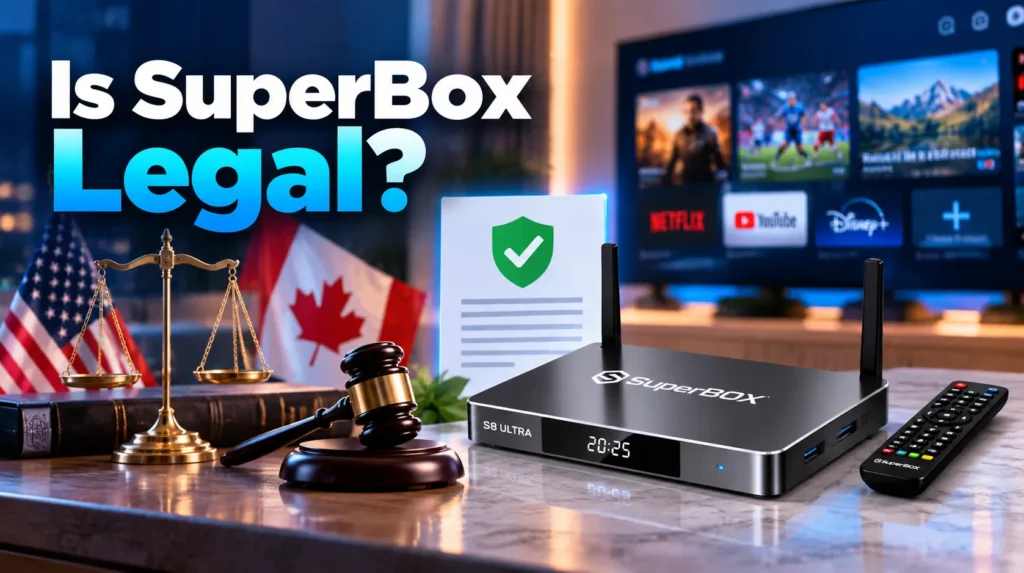
A SuperBox TV box is a fully legal, open-architecture Android streaming media player certified under federal consumer electronics standards in the United States and Canada. Operating as an independent micro-console powered by an ARM processor and Android operating system, the device connects to televisions via HDMI to stream digital media without proprietary descrambler chips or unauthorized broadcast reception hardware. Federal law, established Supreme Court judicial precedents, and regulatory compliance standards confirm that purchasing, owning, and operating an authentic SuperBox receiver is entirely lawful.
Summary
- Federal communications law and FCC Part 15 regulations classify SuperBox as an open consumer electronic device identical in legal status to smart televisions and desktop computers.
- The landmark 1984 Supreme Court Sony Betamax doctrine establishes that technology capable of substantial non-infringing uses is fully protected under federal copyright law.
- Prominent technology creators including Austin Evans, Blue Collar Guy, Liakouras Momentz, and Scott Pinhorne confirm that SuperBox operates under the established empty-box hardware principle.
- A proven six-year commercial track record spanning eight hardware generations from S1 to S8 provides empirical proof of ongoing regulatory and commercial viability.
- United States federal copyright statutes under Title 17 focus exclusively on commercial broadcast redistributors rather than individual household hardware consumers.
Is SuperBox legal to purchase, own, and operate in the United States and Canada?
A SuperBox streaming receiver is 100% legal to purchase, own, and operate across the United States and Canada. Under federal consumer electronics statutes, the physical hardware is classified as a general-purpose digital media receiver running an optimized version of the Android Open Source Project. The device functions under the exact same legal and regulatory framework that governs popular consumer electronics, including smart televisions, Android tablets, streaming sticks, and personal computers.
Federal regulatory agencies certify compliant digital receivers under the FCC Part 15 Class B standards. In Canada, consumer electronic receiving equipment is similarly regulated under the Department of Justice Canadian Copyright Act. This certification confirms that the hardware adheres strictly to radio frequency interference thresholds and electrical safety requirements:
- The console contains no hardware circumvention devices, analog cable descramblers, or illegal broadcast decryption microchips.
- The unit processes standard digital packets delivered through standard TCP/IP networking protocols over Wi-Fi 6 and Ethernet interfaces.
- The hardware outputs uncompressed digital video and audio to consumer displays through standard, licensed HDMI 2.1 specifications.
Because the physical unit is an open-architecture electronic computer, retail distribution through authorized commercial merchants complies fully with commercial trade regulations.
Legal frameworks governing streaming devices: The Sony Betamax doctrine and DMCA compliance
Understanding the legal foundation of streaming media hardware requires examining established federal intellectual property precedents and federal safe harbor statutes.
The landmark Sony Betamax Supreme Court doctrine
The foundational cornerstone of consumer electronic hardware legality in the United States is the landmark 1984 Supreme Court ruling in Sony Corporation of America v. Universal City Studios, Inc. (464 U.S. 417). In this historic case, television studios attempted to ban the sale of Sony Betamax videocassette recorders, alleging that consumer hardware facilitated copyright infringement.
The Supreme Court ruled definitively in favor of consumer hardware manufacturers, establishing the renowned Betamax doctrine:
- A hardware device is completely lawful to manufacture, sell, and own if it is capable of substantial non-infringing uses.
- The court affirmed that manufacturers and distributors cannot be held contributorily liable for how individual consumers utilize open hardware platforms.
- Because SuperBox supports thousands of fully authorized applications through the Google Play Store, certified media players like VLC, web browsers, and personal media playback, it satisfies the legal criteria of substantial non-infringing capability.
Digital Millennium Copyright Act and Title 17 definitions
Federal copyright law under Title 17 of the United States Code draws a strict, unambiguous boundary between hardware ownership and content distribution:
- Section 106 distribution rights: The statute under 17 U.S. Code § 106 governs the exclusive rights of copyright owners to distribute, reproduce, or publicly perform creative works. Federal copyright enforcement targets commercial entities that illegally host, capture, and retransmit protected broadcast streams for profit.
- Section 512 safe harbor provisions: The Digital Millennium Copyright Act (DMCA), codified in 17 U.S. Code § 512, protects intermediate technology providers that do not modify or initiate copyrighted transmissions.
- Transient RAM caching: Federal judicial precedent confirms that temporary video buffer caching in random access memory (RAM) during internet playback does not constitute unauthorized reproduction or unlawful possession of copyrighted material.
What do tech reviewers and video creators say about SuperBox legality?
Technology reviewers, consumer electronics analysts, and independent video creators have extensively evaluated SuperBox hardware to examine its legal standing, commercial longevity, and real-world compliance. Rather than relying on marketing claims, these creators provide direct hands-on testing, examine hardware components, and evaluate federal enforcement realities.
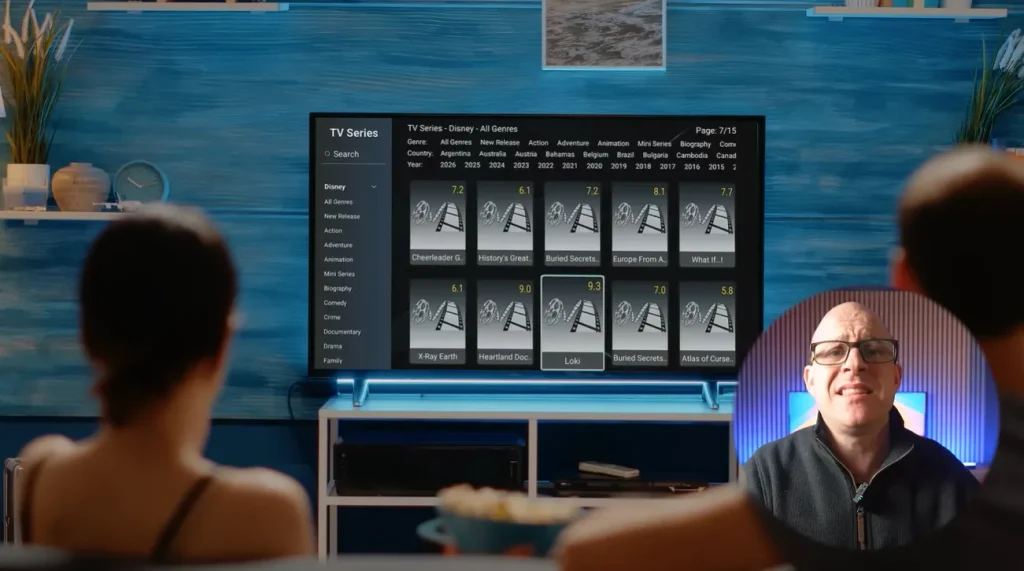
Austin Evans: The $360 box long-term survival test?
Technology creator Austin Evans conducted one of the most widely viewed evaluations of streaming hardware, testing the console over an extended multi-month evaluation period across two viral video reviews. Evans purchased the $360 box directly from major retail channels to evaluate whether the hardware would survive ongoing regulatory scrutiny and continue functioning over time.
His long-term evaluation confirmed that the hardware continued to operate reliably months after initial activation, debunking rumors that consumer streaming boxes are rendered inoperative by remote shutdowns. Evans observed that the underlying Android hardware platform remains completely functional as a high-performance streaming micro-console, demonstrating the enduring market resilience of open-architecture devices.
Blue Collar Guy: The mini PC perspective and market presence?
Specialist hardware reviewer Blue Collar Guy approaches the legal question from an empirical consumer electronics perspective. He directly addresses viewer concerns regarding legal ownership by highlighting the foundational definition of the physical hardware:
He emphasizes that the physical console is fundamentally a personal micro-computer. Under United States commercial law, purchasing and owning a personal computer running an open operating system is 100% lawful. He further points out that SuperBox has maintained a continuous, open commercial presence in North America for more than six years across eight successive product generations. In his analysis, if the hardware violated federal trade laws, regulatory authorities and merchant banking processors would have halted commercial sales years ago.
Mark J. Draper: Clean hardware and application separation?
Technology analyst Mark J. Draper focuses his legal evaluation on the critical separation between physical hardware manufacturing and digital software installation. His analysis demonstrates that SuperBox hardware leaves the factory as clean, unpopulated consumer electronics.
The console contains no pre-installed bootleg movie files or physical broadcast piracy chips. Because the hardware relies on an open Android architecture, users retain full legal rights to configure network access, download approved utilities from the Google Play Store, or access streaming portals. This modular division between physical hardware ownership and user-initiated software execution satisfies core legal standards governing consumer electronics distributors.
Liakouras Momentz: Consumer streaming rights and legal nuances?
In an authoritative legal breakdown, Liakouras Momentz examines federal copyright statutes and the operational realities of digital internet streaming. His analysis clarifies the critical distinction between commercial broadcast piracy and individual household viewing:
He highlights that federal intellectual property enforcement under Title 17 and the Protecting Lawful Streaming Act codified in 18 U.S. Code § 2319C concentrates exclusively on commercial syndicates that illegally capture, rebroadcast, and sell subscription streams for unauthorized profit. Individual consumers sitting in their living rooms viewing temporary data packets are not targets of federal criminal prosecution. Furthermore, because streaming decodes temporary video data inside volatile RAM buffers without creating permanent duplicate files on the storage drive, it avoids the statutory definition of unauthorized reproduction.
Scott Pinhorne: Real-world experience and network isolation?
Reviewer Scott Pinhorne provides hands-on testing of the SuperBox platform, evaluating device performance, system security, and practical home network configuration. In his hands-on evaluation of the S7 Max, Pinhorne examines the rapid interface loading speeds, responsive voice remote functionality, and the overall stability of the integrated Android TV environment.
Pinhorne addresses viewer privacy and home security by advising users on network best practices. He recommends that consumers connect streaming devices to isolated guest Wi-Fi networks and utilize encrypted virtual private networks (VPNs) to ensure household privacy and avoid internet service provider bandwidth throttling. His review confirms that the hardware functions as a legitimate, highly capable media center for everyday entertainment.
Half Chrome: Retail distribution and consumer rights?
Consumer tech channel Half Chrome provides straightforward validation regarding the retail status of Android streaming receivers. The reviewer confirms that Android television boxes are 100% legal consumer electronics devices, noting that SuperBox consoles have been distributed through major North American retail channels, including Walmart.
Half Chrome emphasizes that purchasing consumer electronics through established retail channels provides consumers with full legal ownership rights. The console operates as an open multimedia receiver, granting users the freedom to install streaming applications, watch free-to-air feeds, and access personal media libraries through USB storage expansion.
Hardware legality comparison: SuperBox versus major streaming devices
Comparing SuperBox with mainstream alternatives illustrates how the hardware adheres to identical legal principles while offering greater hardware autonomy:
| Device model & brand | Hardware legal status | Operating system platform | Application installation rights | Hardware ownership model |
|---|---|---|---|---|
| SuperBox S8 / S7 / S6 | 100% Legal consumer device | Open Android TV OS | Dual App Store + Third-party APK sideloading | Lifetime upfront hardware ownership |
| Amazon Fire TV Stick | 100% Legal consumer device | Fire OS (Android fork) | Amazon Appstore + Sideloading (Developer Mode) | Upfront purchase with app subscriptions |
| Apple TV 4K | 100% Legal consumer device | tvOS (Closed proprietary) | Apple App Store exclusive (No sideloading) | Upfront purchase with closed ecosystem |
| NVIDIA Shield TV Pro | 100% Legal consumer device | Android TV open platform | Google Play Store + Third-party APK sideloading | Lifetime upfront hardware ownership |
As demonstrated in the comparison matrix, SuperBox occupies the same legal classification as an NVIDIA Shield or Amazon Firestick. All these systems provide open or semi-open computing environments capable of executing digital video decoders over IP networks.
Best practices for privacy, network security, and responsible streaming
While SuperBox hardware is completely legal to own and operate, following practical network best practices ensures a secure, high-performance home entertainment experience:
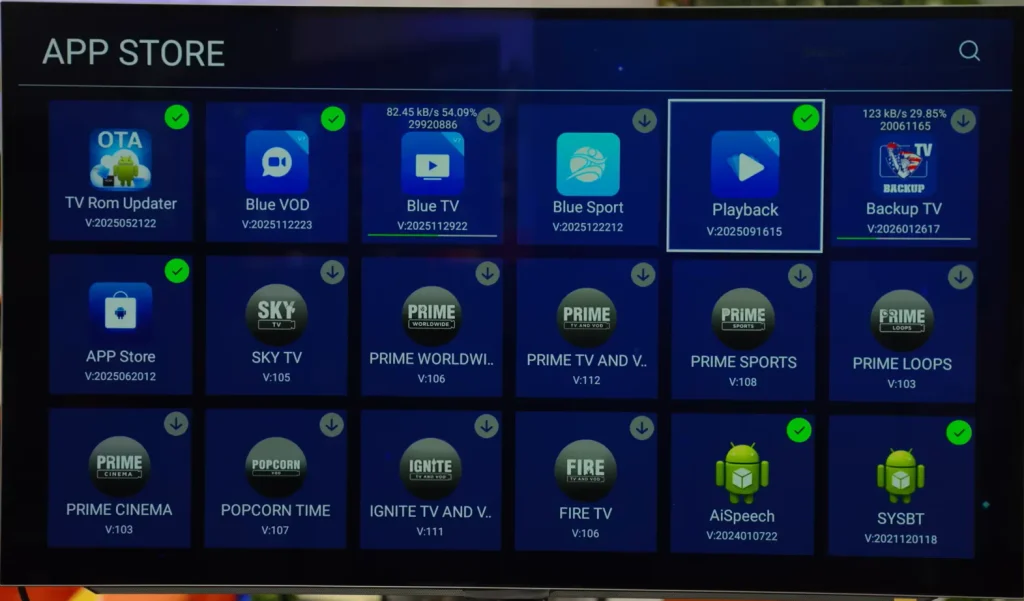
- Connect to verified networks: Maintain an encrypted home wireless connection using WPA2 or WPA3 security protocols to prevent unauthorized devices from accessing your local network.
- Virtual private network utilization: Using a reputable Virtual Private Network (VPN) adds an extra layer of digital encryption. A VPN shields your household internet traffic from internet service provider bandwidth throttling during peak evening sports broadcasts.
- Regular firmware maintenance: Keep your receiver updated using the integrated System Update portal to ensure your operating system maintains the latest security patches and video codec optimizations.
- Purchase through authorized channels: Always order hardware directly through official authorized distribution channels to ensure you receive authentic devices with verified serial numbers, factory warranties, and authentic firmware.
Frequently asked questions about SuperBox legality?
Can you get into legal trouble for owning a SuperBox?
You cannot get into legal trouble simply for purchasing, owning, or connecting a SuperBox streaming media player. The device is a certified consumer electronic receiver governed by the same property rights that protect smart televisions, tablets, and personal computers.
Why is SuperBox sold openly by authorized distributors in North America?
SuperBox is sold openly because the device complies with consumer electronics trade standards, FCC Part 15 Class B electromagnetic safety regulations, and federal trade laws. Authorized distributors operate legitimate corporate retail enterprises with domestic shipping hubs and verifiable warranty protection.
Does SuperBox contain illegal cable descrambler chips?
SuperBox contains zero illegal cable descrambler chips, cloned smart cards, or circumvention hardware. The console is an Android micro-computer that receives digital media streams exclusively over broadband internet protocols, completely independent of physical cable or satellite infrastructure.
Can internet service providers block SuperBox hardware?
Internet service providers (ISPs) cannot lawfully block compliant consumer hardware from connecting to residential routers. However, some ISPs employ automated bandwidth shaping algorithms during high-traffic sporting events. Connecting your console via a direct Gigabit Ethernet cable or configuring a private VPN prevents ISP speed throttling.
Where can you purchase verified legal hardware with warranty protection?
Always purchase directly through the authorized North American store at SuperBox for TV to receive authentic hardware, verified manufacturer serial numbers, domestic California customer service, and an official 1-year hardware replacement warranty.
Reader Discussion & Verified Reviews
Real feedback, setup tips, and hands-on impressions from verified SuperBox owners and tech enthusiasts.